
TOP 10 MOST EFFECTIVE EXERCISES FOR SCIATICA PAIN
10 Gentle Exercises for Sciatica Pain Relief and Mobility
Sciatica describes pain, tingling, numbness or weakness that travels along the path of the sciatic nerve, usually from the lower back or buttock into the leg. The right exercises may help improve mobility, strength and confidence, but the best movement depends on what is causing the nerve irritation.
What is sciatica?
Sciatica is a symptom pattern rather than a single disease. It occurs when a nerve root in the lower spine becomes irritated or compressed. Common causes include a herniated disc, spinal stenosis, age-related changes in the spine and, less commonly, other conditions affecting the lower back or pelvis. 1 2
Symptoms may include burning pain, an electric or shooting sensation, tingling, numbness or weakness. Pain often travels from the lower back or buttock into the back or side of one leg. Some people have leg symptoms with little or no lower back pain.
Common pattern: Sciatica usually affects one side. Symptoms may worsen with sitting, bending, coughing, sneezing or certain spinal positions, depending on the cause.

How movement supports sciatica recovery
Exercise does not remove every cause of sciatica, but appropriate movement may support recovery and reduce fear of activity.
Before you begin these sciatica exercises
Stop or modify an exercise if it causes sharp pain, stronger tingling, spreading numbness, new weakness or symptoms that stay noticeably worse afterward.
Exercise selection should be based on your response. Some people feel better with gentle extension, while others tolerate flexion-based movements more comfortably. A physical therapist or qualified healthcare professional can help identify the safest direction for your symptoms.
- Move slowly and avoid bouncing.
- Use a comfortable range rather than forcing a stretch.
- Begin with fewer repetitions than the maximum listed.
- Use a mat or stable surface.
- Do not hold your breath during strengthening exercises.
10 exercises that may help with sciatica pain
These exercises target mobility, trunk control, gluteal strength and lower-body flexibility. They are not appropriate for every diagnosis, so use symptom response as your guide.
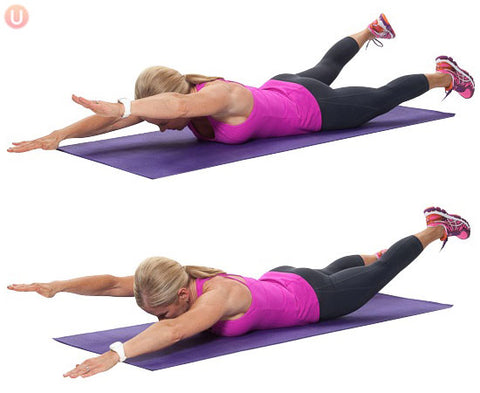
Opposite arm and leg extension
Lie on your stomach with your arms extended. Gently tighten your abdomen, then lift one arm and the opposite leg only as high as is comfortable. Keep the neck relaxed and avoid excessive arching.
Lower slowly, then repeat on the opposite side.
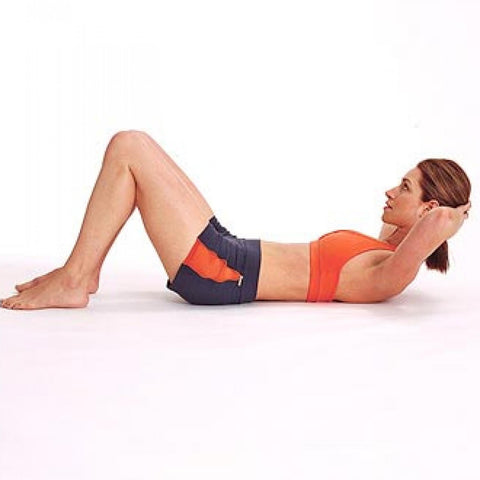
Modified curl-up
Lie on your back with your knees bent. Place your hands across your chest or gently support the head without pulling on the neck. Tighten your abdomen and lift the head and shoulders slightly.
Hold briefly, then lower with control.

Controlled leg raise
Lie on your back with one knee bent and the other leg straight. Tighten your abdominal muscles, then lift the straight leg a short distance without arching the lower back.
Hold briefly, lower slowly and switch sides.

Single knee-to-chest stretch
Lie on your back and gently bring one knee toward the chest. Keep the opposite leg comfortable, either bent or straight.
Hold only if the position reduces or does not worsen leg symptoms.

Figure-four glute stretch
Lie on your back with both knees bent. Cross one ankle over the opposite thigh, then gently draw the supporting leg toward you.
You should feel a mild stretch in the buttock, not sharp pain or increasing tingling.

Supported hamstring stretch
Rest one heel on a low step. Keep the spine long and hinge slightly forward from the hips until a mild stretch is felt in the back of the thigh.
Do not force the stretch or round aggressively through the lower back.

Gentle prone extension
Lie face down and place your forearms under your shoulders. Gently lift the chest while keeping the hips relaxed on the floor.
Use a small range. Stop if leg pain spreads farther down the leg or numbness increases.

Glute bridge
Lie on your back with your knees bent and feet flat. Tighten the abdomen and buttock muscles, then lift the hips until the trunk and thighs form a comfortable line.
Pause briefly and lower slowly.

Modified forearm plank
Begin on your forearms and knees. Tighten the abdomen and keep the head, trunk and hips aligned. Progress to the toes only when the knee-supported version is comfortable.
Keep breathing and avoid letting the lower back sag.

Modified downward dog
Begin on your hands and knees. Lift the hips upward while keeping the knees slightly bent. Lengthen through the spine rather than forcing the heels toward the floor.
Stop if the position increases pain traveling down the leg.
How to build a beginner sciatica exercise routine
You do not need to perform all 10 exercises in one session. Choose a small group that feels comfortable and does not worsen leg symptoms.
| Goal | Exercise examples | Beginner approach |
|---|---|---|
| Gentle mobility | Knee-to-chest, prone extension or downward dog | Choose one movement direction that feels comfortable. Perform 5 slow repetitions or a brief hold. |
| Hip flexibility | Figure-four stretch or supported hamstring stretch | Hold gently for 15 to 20 seconds without forcing the range. |
| Core and hip strength | Bridge, modified plank or opposite arm and leg extension | Start with 5 controlled repetitions or a 10-second hold. |
| Aerobic activity | Comfortable walking, stationary cycling or pool exercise | Begin with a duration you can tolerate and increase gradually. |
Progression tip: Increase only one variable at a time. Add repetitions, duration or range gradually rather than increasing everything at once.
What else may help with sciatica pain?
Stay active within tolerance
Long periods of bed rest are generally not recommended for most cases of uncomplicated sciatica. Gentle walking and regular position changes may be better tolerated than remaining still for long periods.
Break up prolonged sitting
Stand, walk or change position regularly. A chair that supports the lower back and allows the feet to rest on the floor may improve comfort.
Use heat or cold for temporary comfort
Heat or cold may provide short-term symptom relief for some people. Protect the skin with a cloth barrier and avoid prolonged exposure.
Review lifting technique
Keep loads close to the body, avoid twisting while lifting and ask for help with heavy or awkward objects.
Consider physical therapy
A physical therapist can assess which movements improve or worsen symptoms and create a more individualized strengthening and mobility plan.
When should you seek medical care?
Arrange an evaluation if symptoms are severe, keep returning, interfere with normal walking or work, or do not begin to improve with appropriate self-care.
Seek urgent medical attention for:
- New loss of bladder or bowel control
- Numbness around the groin, inner thighs or saddle area
- Rapidly increasing leg weakness
- Symptoms affecting both legs
- Severe pain after a fall, accident or significant injury
- Fever, unexplained weight loss or a history of cancer
- Severe night pain that does not improve with position changes
These symptoms may indicate a condition that requires prompt assessment. 1 3
Frequently asked questions
What is the best exercise for sciatica?
There is no single best exercise for every case. The most appropriate movement depends on the cause of the symptoms and whether flexion, extension or another position improves the pain. A physical therapist can help identify the most suitable direction.
Should I stretch through sciatic nerve pain?
No. A stretch should not produce sharp, electric or spreading nerve symptoms. Gentle muscle tension may be acceptable, but increasing numbness, tingling or pain farther down the leg is a sign to stop or modify the movement.
Is walking good for sciatica?
Walking may be helpful when performed at a tolerable pace and duration. Start with short walks and stop or reduce the distance if leg symptoms become progressively worse.
Can strengthening exercises make sciatica worse?
Any exercise can aggravate symptoms when it is too difficult, performed with poor control or unsuitable for the underlying cause. Begin with a low dose and monitor how symptoms respond during and after the session.
How long does sciatica take to improve?
Recovery varies. Many uncomplicated cases improve over several weeks, but persistent numbness, weakness or severe pain may require additional evaluation and treatment.
Should I rest in bed with sciatica?
Prolonged bed rest is generally not recommended for uncomplicated sciatica. Short periods of rest may be helpful during a flare, but gentle activity and regular position changes are usually encouraged as tolerated.
Key takeaways for sciatica exercises
Gentle movement, progressive strengthening and regular activity may help many people manage sciatica symptoms. The most useful exercises are the ones that improve mobility and confidence without causing pain to spread farther down the leg.
Begin slowly, choose a few well-tolerated exercises and monitor how your symptoms respond. Persistent numbness, increasing weakness or red-flag symptoms should be evaluated by a qualified healthcare professional.
Sources and further reading
- Mayo Clinic. Sciatica: Symptoms and causes .
- American Academy of Orthopaedic Surgeons, OrthoInfo. Sciatica .
- National Health Service. Sciatica .
- National Institute of Neurological Disorders and Stroke. Low Back Pain .
